

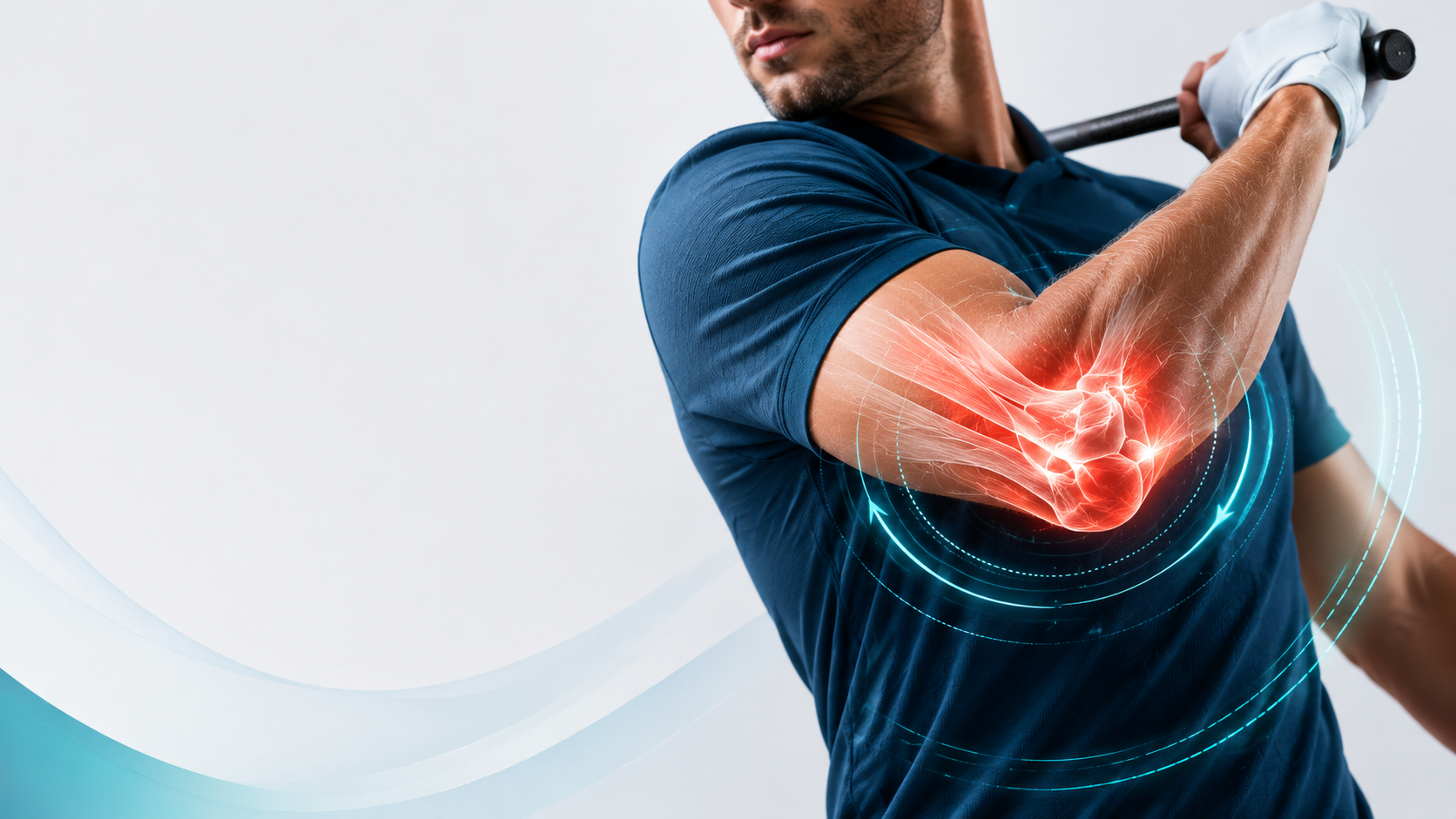
Elbow & Forearm Recovery
Your Daily Activities May Be Placing More Stress on Your Elbows and Forearms Than You Think
Golfer’s elbow is not only a golfer’s problem.
Many people assume elbow and forearm discomfort only develops from playing golf or other racket sports.
But in reality, modern movement habits may place constant stress on the forearm and elbow throughout the day.
These activities may include:
-
Tennis and pickleball
-
Badminton
-
Baseball and throwing sports
-
Weight training
-
CrossFit
-
Rock climbing
-
Rowing workouts
-
Long-distance cycling
-
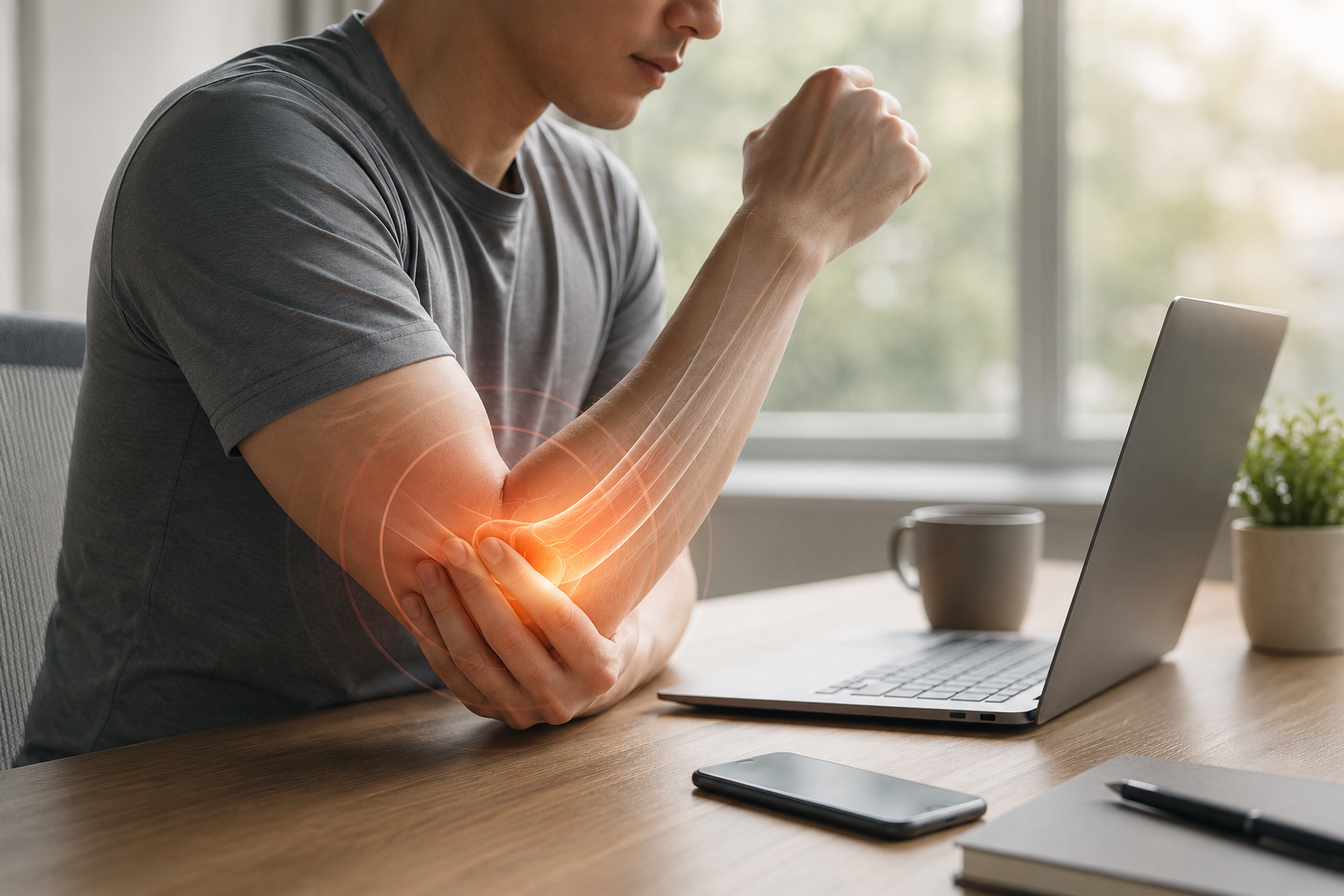
Extended mouse and keyboard use
Although these activities look different, they often share one thing in common:
Repetitive gripping, rotation, and force generation.
Over time, these patterns may place continuous tension on the muscles, tendons, and connective tissues of the forearm.
When recovery cannot keep pace with daily demand, symptoms may begin to appear:
-
Tightness around the forearm
-
Inner elbow discomfort
-
Reduced grip strength
-
Wrist fatigue
-
Post-training soreness
-
Stiffness during daily activities
At first, many people dismiss these sensations as simple fatigue.
Until swinging, lifting, typing, or even carrying a bag starts to feel uncomfortable.
Why the Forearm and Elbow Accumulate Stress So Easily
The forearm is responsible for far more than most people realize.
It helps control:
-
Grip strength
-
Wrist movement
-
Hand coordination
-
Force transfer through the arm
Nearly every activity involving the hands relies on the forearm muscles working continuously.
The challenge is simple:
The forearm works constantly — but most people rarely think about recovering it.
This becomes especially important when:
-
Repetitive movement volume increases
-
Training intensity rises
-
Grip demands remain high
-
Recovery time becomes limited
As fatigue accumulates, stress may continue concentrating throughout the forearm and elbow system.
Over time, tissues may become tight, sensitive, and less adaptable to daily demands.
Golfer’s Elbow Is Often a Recovery Problem
Not simply an elbow problem.
One of the biggest challenges today is not lack of activity.
It is lack of recovery.
Long training sessions.
Hours of repetitive hand use.
Work performed on top of accumulated fatigue.
The body often receives far more stress than it receives recovery.
When this imbalance continues, deep tension may begin building throughout the forearm.
The elbow is frequently one of the first places where warning signs appear.
That is why recovery is not simply about reducing discomfort.
It is about helping the body maintain its ability to recover continuously.
The VITAL SALVEO Philosophy
Recovery should keep moving.
At VITAL SALVEO, we believe effective recovery should not require stopping movement completely.
It should support the body's natural recovery rhythm throughout everyday life.
That is why we redefine recovery wear as:
Active Energy Management Gear
Designed to support recovery through movement itself.
Supporting Recovery Through Everyday Wear
At the core of VITAL SALVEO is our:
3D Bio-Dynamic Infrared Recovery Technology
This system combines:
-
Graphene fibers
-
Germanium technology
-
Ergonomic dynamic structures
When the fabric reaches approximately 32°C against the skin, it activates our Thermal Trigger System.
Using natural body heat, the fabric is designed to continuously generate infrared energy.
This process helps create a photobiomodulation-inspired environment that supports:
-
Circulation
-
Muscle relaxation
-
Everyday comfort
-
Recovery efficiency
No batteries.
No external devices.
Simply recovery support integrated naturally into daily movement.
Whether during:
-
Golf swings
-
Training sessions
-
Office work
-
Everyday activities
Recovery support continues to move with you.
Why “Flow, Not Restriction” Matters
When discomfort appears, many people immediately turn to rigid braces or overly tight support products.
While restriction may feel supportive temporarily, excessive compression can interfere with natural movement patterns.
This is especially important for the forearm and elbow, where fluid coordination directly affects performance and comfort.
That is why VITAL SALVEO believes in:
Flow, Not Restriction.
Through our 3D Bio-Dynamic Structure, we help balance:
-
Stability
-
Freedom of movement
-
Breathability
-
Natural circulation flow
Because the best recovery should not limit movement.
It should help movement feel more natural.
Forearm Health Is Everyday Health
Most people only think about elbow and forearm recovery once discomfort appears.
But long-term forearm wellness is closely connected to:
-
Daily circulation
-
Movement efficiency
-
Muscle recovery
-
Fatigue management
-
Overall movement quality
True recovery is not something that begins after injury.
It is something that supports the body every day.
VITAL SALVEO
Wake Up Your Body’s Potential.


Share:
It’s Not Just Tennis Players Anymore
Why Are More People Wearing Full Leg Sleeves?