

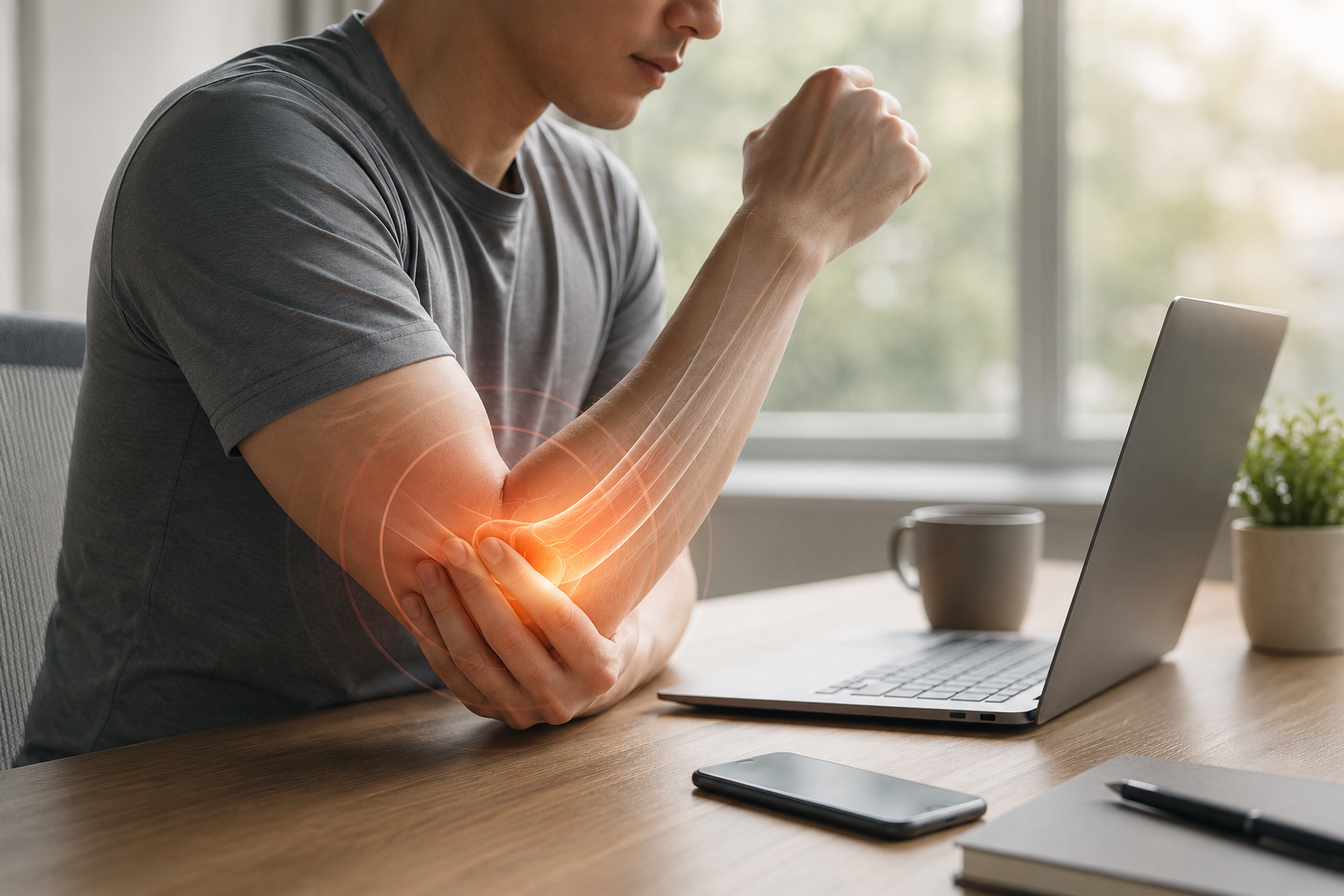
Tennis Elbow Recovery
It’s Not Just Tennis Players Anymore
How Modern Movement Habits May Be Affecting Your Elbows More Than You Think
Many people assume tennis elbow only affects athletes.
But in reality, modern daily routines may place increasing stress on the muscles and tendons surrounding the elbow.
These habits may include:
-
Long hours of typing
-
Frequent mouse use
-
Scrolling on smartphones
-
Weight training
-
Repetitive work tasks
-
Continuous gripping activities
-
Extended periods of upper-body use
Over time, these patterns may place the forearms and elbows under constant tension.
When recovery becomes less efficient, symptoms may begin to appear:
-
Forearm tightness
-
Elbow discomfort
-
Wrist fatigue
-
Reduced gripping comfort
-
Arm tension after long periods of activity
At first, many people dismiss it as simple overuse.
Until everyday tasks such as lifting, carrying, or gripping begin to feel less comfortable.
Why Elbow Stress Accumulates So Easily
The elbow is part of a highly active movement system.
It connects:
-
The forearm muscles
-
The wrist
-
The hand and grip mechanics
-
Everyday upper-body movement
Nearly every task involving the hands relies on the forearm muscles and tendons to generate force and control movement.
The challenge is simple:
The forearms work constantly — but most people rarely think about helping them recover.
This becomes especially important when:
-
Repetitive movement increases
-
Grip demands remain high
-
Posture becomes less balanced
-
Fatigue accumulates throughout the day
When these factors build up, stress may continue to concentrate around the elbow and forearm region.
Over time, tissues may become tight, sensitive, and less adaptable to daily demands.
Tennis Elbow Is Often a Recovery Problem
Not just a sports injury.
One of the biggest modern challenges is not lack of activity.
It is lack of recovery.
Long hours of:
-
Typing
-
Working
-
Lifting
-
Gripping
-
Repetitive movement
often leave little opportunity for the upper body to fully recover.
As fatigue accumulates, natural movement patterns may become less efficient.
The forearms and elbows are often among the first areas to show warning signs.
That is why recovery is not only about resting.
It is about supporting recovery throughout daily life.
The VITAL SALVEO Philosophy
Recovery Should Keep Moving
At VITAL SALVEO, we believe effective recovery should not mean completely stopping movement.
It should help the body maintain a healthier recovery rhythm while staying active.
That is why we redefine recovery gear as:
Active Energy Management Gear
Designed to support recovery through everyday movement.
Supporting Recovery Through Everyday Wear
At the core of VITAL SALVEO is our:
Thermal Trigger Technology
Designed to activate naturally through body heat.
Using everyday movement and warmth, the technology is engineered to help create a more supportive recovery environment throughout the day.
The design philosophy focuses on supporting:
-
Everyday comfort
-
Movement efficiency
-
Muscle relaxation
-
Natural circulation support
No batteries.
No complicated setup.
Just recovery support integrated naturally into daily life.
Why “Flow, Not Restriction” Matters
When discomfort appears, many people immediately reach for highly restrictive support products.
While compression and rigid support may feel helpful temporarily, excessive restriction can sometimes interfere with natural movement patterns.
This is especially important for the elbow and forearm — areas designed for constant, dynamic movement.
That is why VITAL SALVEO believes in:
Flow, Not Restriction.
Our design philosophy focuses on balancing:
-
Stability
-
Freedom of movement
-
Everyday comfort
-
Natural movement flow
Because the best support should not stop movement.
It should help you move more comfortably.
Elbow Health Is Everyday Health
Most people only think about elbow wellness once discomfort appears.
But upper-body comfort is closely connected to:
-
Daily movement habits
-
Muscle recovery
-
Circulation
-
Postural balance
-
Long-term fatigue management
True recovery is not something that begins only after injury.
It is something that should support the body every day.
More Natural Movement. Every Day.
Support.
Flow.
Stability.
Comfort.
Designed to move with the body — not against it.
VITAL SALVEO
Wake Up Your Body’s Potential.


Share:
Why Your Knees Don’t Feel the Same Anymore
Why Do Your Elbows and Forearms Feel Overloaded After Swinging or Training?