

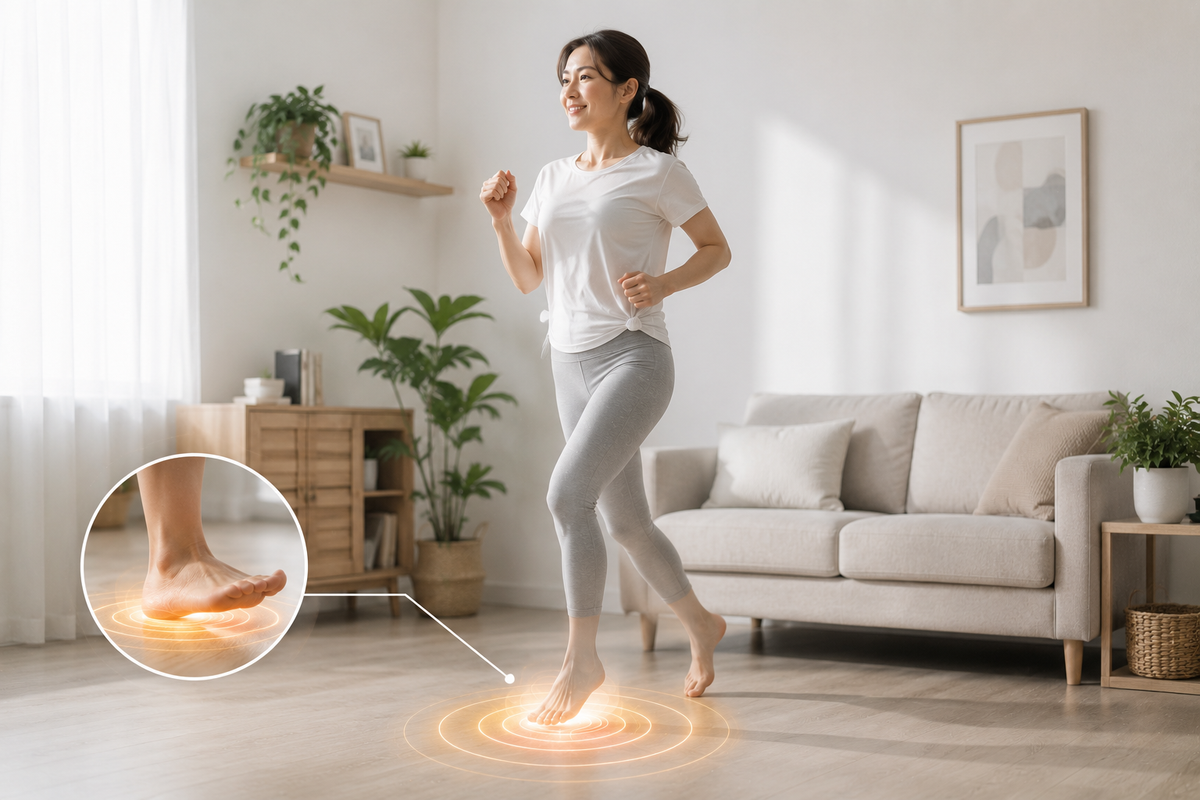
Sometimes, moving at your own pace is what helps you keep going.
When people think about running, they often picture speed, constant forward motion, and finishing a workout covered in sweat.
That image can make running feel like something you need to prepare for before you are truly ready to begin.
For people who have not exercised regularly in a long time, have busy schedules, or simply do not know where to start, running may feel less like an accessible activity and more like a challenge that requires the right fitness level, equipment, and mindset.
In recent years, however, more people have started exploring a different approach.
Exercise does not always have to begin with pushing your limits.
It does not always have to mean moving faster, going farther, or completing a longer distance.
Activities such as slow jogging have gained attention not simply because they involve running at a slower pace.
Their real appeal is that they can make movement easier to begin—and easier to continue.
With smaller steps, a steady rhythm, and an intensity that suits your current condition, exercise can begin with one manageable step at a time.
When Movement Is Easier to Begin, It Becomes Easier to Continue
Most people understand the importance of regular physical activity.
The real challenge is often not knowing why movement matters.
It is finding a way to keep doing it.
Some people feel they never have enough time because of work.
Others worry that their fitness level is too low.
Some assume that running requires special equipment, the right environment, or a certain level of experience before they can even begin.
Slow jogging appeals to many people because it lowers the mental barrier to movement.
You do not need to set a long-distance goal.
You do not need to complete a long session on your first day.
In a safe and suitable environment, even a few minutes can become the beginning of a more consistent routine.
For many people, what matters most is not how much they accomplish on day one.
It is being willing to begin today—and willing to continue tomorrow.
When exercise stops feeling like an occasional challenge and begins to fit naturally into everyday life, staying active becomes much more realistic.
Moving More Slowly Does Not Mean Your Body Is Not Working
Because of its name, slow jogging can easily be misunderstood as an activity that requires very little effort.
But the goal is not simply to move as slowly as possible.
It is to help the body maintain a natural and steady rhythm.
Slow jogging still involves the entire body.
With every landing and takeoff, the ankles help manage the transition.
The knees and hips continue supporting balance and movement.
The core helps stabilize the torso and keeps the upper body from moving excessively.
Arm swing, breathing, and shifts in body weight all work together throughout the activity.
So moving slowly does not mean the body is resting.
What changes is not whether the body works.
What changes is where your attention goes—from speed back to the quality of each step.
Why Can Slow Running Still Feel Tiring?
Many people have the same question when they first try slow jogging:
“If I am not running fast, why do I still feel tired?”
The answer is simple.
Moving slowly does not mean the body has stopped working.
As long as the activity continues, the body must keep coordinating, balancing, and controlling movement.
●The legs alternate continuously.
●The core remains engaged.
●Breathing adjusts to match the rhythm of each step.
The upper and lower body work together so movement can stay smooth and controlled.
What looks like relaxed movement from the outside is still the result of the whole body working together.
That is why even at a slower pace, you may notice changes in breathing, fatigue in the legs, or a steady sense of core engagement after some time.
The challenge is not only in running itself.
It is in maintaining natural, stable control from one step to the next.
Finding Your Own Rhythm Matters More Than Keeping Up With Others
On social media, it is easy to see people sharing twenty-minute, thirty-minute, or even longer slow-jogging sessions.
But everyone has a different lifestyle, fitness level, exercise background, and amount of energy available on any given day.
The duration, cadence, and pace that work for someone else may not be right for you right now.
Some people prefer completing one full session.
Others do better with several shorter periods of movement.
Some days you may feel energized and ready to keep going.
On other days, you may simply want to give your body ten minutes to move.
What matters most is not matching someone else's pace.
It is finding a rhythm you can maintain with stability and comfort.

When breathing becomes rushed, your steps begin to lose coordination, or your body becomes unnecessarily tense, it may be time to slow down, shorten the session, or rest.
A rhythm you can sustain over time often matters more than doing more in a single workout.
Every Step Is About Quality, Not Speed
Slow jogging may look simple, but natural movement still depends on many details working together.
It is not about taking the biggest steps possible.
It is about whether your stride feels natural.
It is not about moving as fast as you can.
It is about whether your breathing remains steady.
It is not about lasting as long as possible.
It is about whether your body can stay stable and relaxed.
Some people focus so much on cadence or duration that they stop noticing whether their shoulders are rising, their arms are becoming stiff, or their footsteps are landing more heavily.
These small changes may be signs that the body is beginning to rely on extra tension to keep moving.
Slow jogging is not simply about keeping the feet in motion.
It is also about helping posture, breathing, stride, and balance work together—so movement remains natural, stable, and sustainable.
You May Not Notice It During the Session—But Your Body Does
For many people, the physical sensations of slow jogging become more noticeable after the activity is over.
You may experience:
●Mild fatigue in the calves
●Light tightness in the thighs or glutes
●A steady feeling of core engagement
●More noticeable breathing
Greater awareness of muscles you do not usually pay attention to
These sensations are common when you are new to slow jogging, returning to regular activity, or gradually increasing the duration of your sessions.
In many cases, they are simply part of the body's adjustment to a new movement pattern and to different muscle groups working together.
However, if pain, swelling, numbness, or other discomfort persists, repeatedly returns, or begins to interfere with daily life, consult a qualified healthcare professional.
Better Movement Habits Begin Every Day
Slow jogging may be easy to begin, but it should still be approached gradually.
This is especially important for people who have not exercised regularly for a long time or whose daily routines involve extended periods of sitting or standing.
You can begin with a few simple habits:
Warm up gently before activity so the body can gradually prepare for movement.
Start with shorter sessions and increase the duration according to your current condition.
Keep your breathing natural instead of holding your breath or forcing a faster cadence.
Use small, comfortable steps rather than deliberately overstriding.
Choose a safe, even surface with enough space to move.
Wear suitable clothing and footwear.
Allow time to rest afterward and pay attention to how your body responds.
If you are new to slow jogging or returning to regular exercise after a long break, adjust the duration and intensity gradually according to your own condition.
If you have chronic pain, are recovering from surgery, are pregnant, or have another health-related condition, consider consulting a qualified instructor or healthcare professional before beginning.
What Matters Most Is Making Movement Part of Everyday Life
Many people begin exercising with a clear goal.
It may be completing a certain number of minutes each day.
Exercising several times a week.
Or staying consistent for a specific period of time.
These goals can provide motivation.
But what often determines whether exercise truly lasts is not how much you complete.
It is whether movement can fit naturally into your life.
If every workout requires a large amount of preparation, or if you constantly expect yourself to train at a high intensity, exercise can easily become another source of pressure.
Slow jogging offers another option.
It brings movement back to something simpler.
You do not have to complete a long session every time.
And you do not have to give up entirely just because one day is busy.

What matters most is not completing the longest distance.
It is being willing to take another step—even when life becomes busy or your routine changes.
Designed for Every Step
At Vital Salveo, we believe great wearable design should not restrict movement.
It should move naturally with every step.
Whether you are slow jogging, walking, commuting, or simply moving through everyday life, every step has its own rhythm.
●Every shift in balance.
●Every breath.
●Every landing.
Each one deserves a wearing experience that feels natural, comfortable, and effortless.
That is why we continue exploring materials, structure, and ergonomic design to create products that move with the body rather than against it.
Our Wearable Design Philosophy
Every Vital Salveo product is built around three core design philosophies.
We believe ideal wearable design is not simply about wrapping the body.
It is about moving with it.
Whether you are slow jogging, going about your daily routine, working, or traveling, we aim to create a balance between comfort, fit, stability, and freedom of movement.
From material selection and three-dimensional construction to the overall wearing experience, every design decision begins with the body's natural way of moving.
3D Dynamic Structure
Support That Moves With Every Step
Every step depends on different parts of the body working together.
3D Dynamic Structure combines ergonomic design, Dynamic Compression, and seamless knitting technology to create a balance between fit, stability, and freedom of movement.
The goal is to allow the product to move naturally with each step rather than limit the body's normal movement.
Thermal Trigger
Inspired by the Body's Natural Warmth
The body naturally generates warmth during movement.
Thermal Trigger is Vital Salveo's design concept inspired by the body's natural activity.
By incorporating the material characteristics of graphene and germanium, the design is intended to integrate naturally into a variety of everyday movement settings.
No external power source.
No additional equipment.
Just a design concept created to accompany natural movement throughout the day.
Photo Dynamic Modulation
Designed Around Everyday Rhythm
Together with 3D Dynamic Structure and Thermal Trigger, Photo Dynamic Modulation forms one of Vital Salveo's three core design philosophies.
It represents our ongoing exploration of innovative materials, wearable comfort, and everyday movement quality—not any medical function or therapeutic purpose.
From slow jogging and walking to the ordinary movements of daily life, our goal is to create a wearing experience that feels natural, comfortable, and easy with every step.
Every Step Deserves Better Support
Slow jogging may offer more than another way to run.
It may also remind us that movement does not always have to mean going faster, farther, or doing more.
Sometimes, what matters most is simply being willing to begin.
Willing to continue.
Willing to move forward at your own pace.
When exercise becomes easier to begin and easier to maintain, even the smallest steps can gradually become part of a lasting movement habit.
Because the most meaningful progress is not always found in the fastest run.
Sometimes, it is found in choosing to keep moving—one day at a time.
Protect Every Movement.
Wake Up Your Body's Potential.
Whether you move quickly, run slowly, or simply choose to take one more step today, every movement deserves care.
At Vital Salveo, we continue exploring wearable designs that work more naturally with the way the body moves.
Our goal is to accompany people who value movement quality through every stage of life—so they can enjoy each step with greater comfort, confidence, and freedom.
Because great wearable design does not belong only in exercise.
It belongs in every step of everyday life.



Share:
Why Do You Shake During Pilates?