

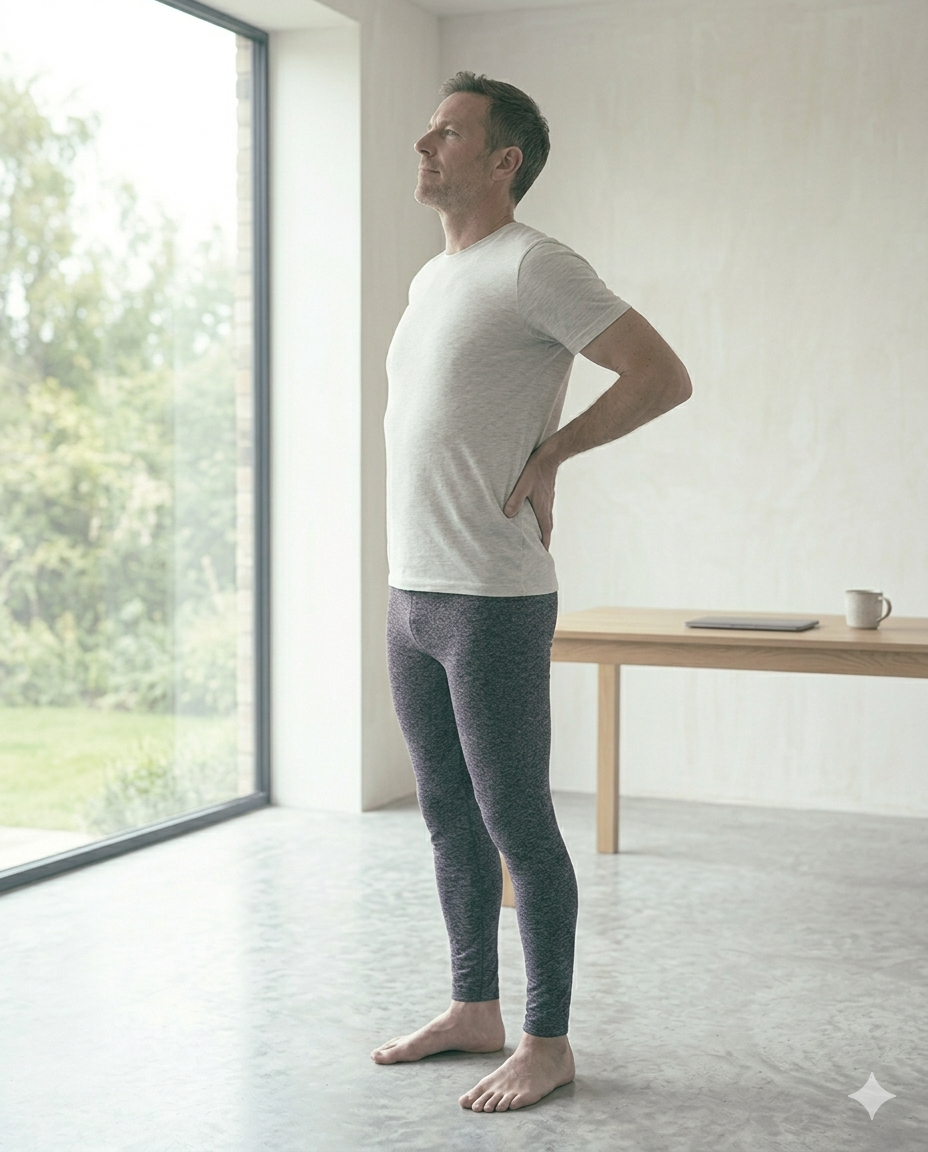
Back discomfort during long hours
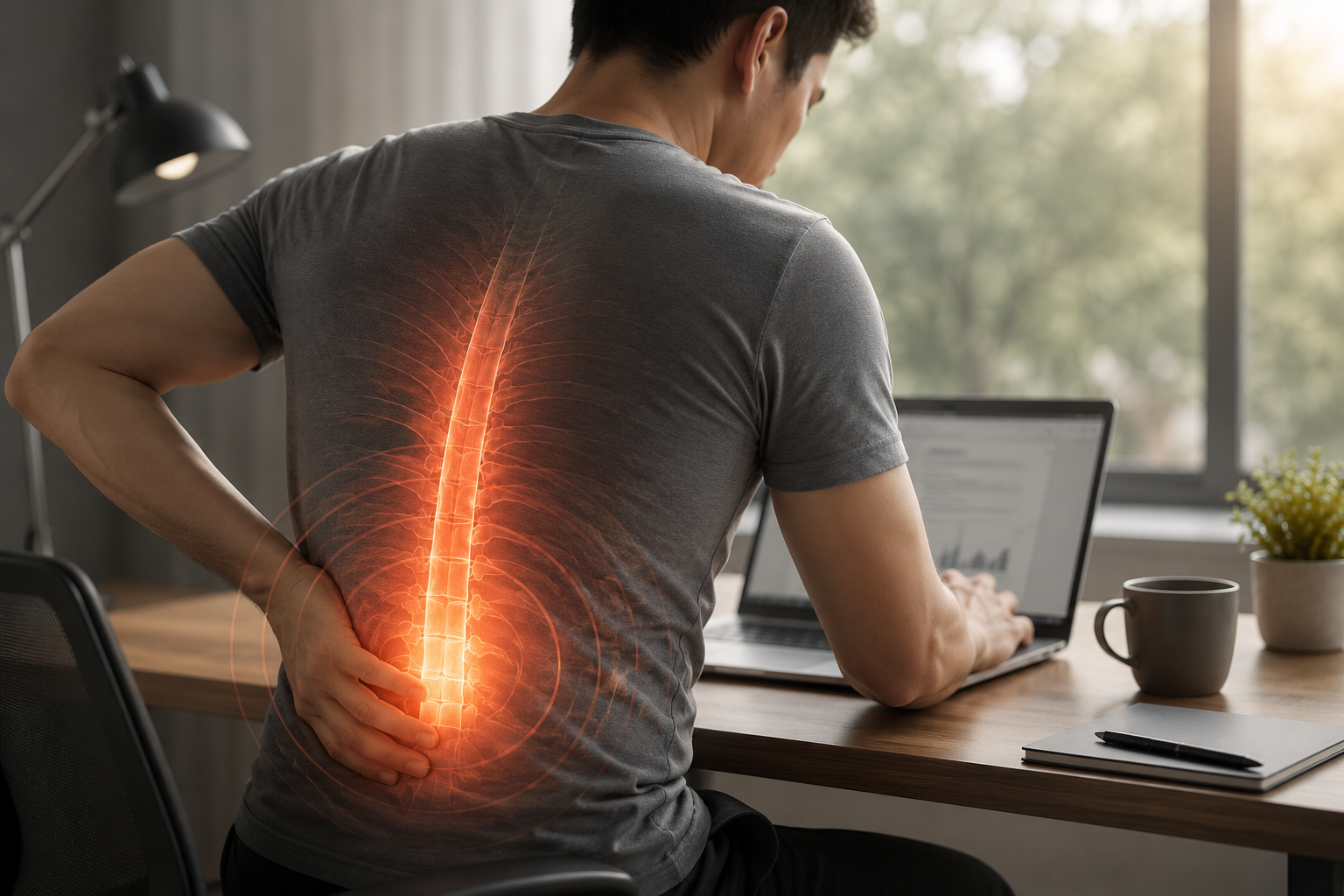
Back discomfort is common for people who sit, stand, drive, work, or study for long periods. It may appear as stiffness, fatigue, tightness, or a general feeling that the back needs more support during the day.
In many cases, the issue is not just sitting or standing itself, but staying in one position for too long without movement variation.
Why long hours may affect the back
The back is designed to move. When posture stays unchanged for extended periods, the muscles around the spine may become tired or stiff. Long sitting can also reduce hip mobility and place extra stress on the lower back.
Standing for long periods may create a different type of fatigue, especially when the core, hips, or legs are not sharing the load efficiently.
Common situations
- Lower back stiffness after sitting
- Back fatigue after standing at work
- Discomfort after long driving or travel
- Feeling unsupported during daily routines
- Needing extra stability during movement or recovery
What may help
Changing position regularly is one of the simplest ways to reduce back fatigue. Short walking breaks, gentle stretching, and alternating between sitting and standing can help the back feel less restricted.
Core and hip strengthening may also support better movement control over time. Start with manageable exercises and increase gradually.
When back support may be useful
A back or waist support may help when you want extra stability during long hours, light activity, or tasks that require repeated bending, standing, or lifting. It can provide a more supported feeling when the back feels tired or less steady.
Support should not replace movement, but it may help create confidence during activities that place repeated demand on the lower back.
Choosing the right support
Look for a support that feels stable around the waist or lower back without being overly restrictive. It should allow comfortable breathing, sitting, and movement.
If back discomfort is severe, radiates down the leg, or comes with numbness, weakness, or sudden injury, seek professional medical advice.


Share:
Shoulder support for daily reach and range of motion
Ankle support for walking stability and daily movement