

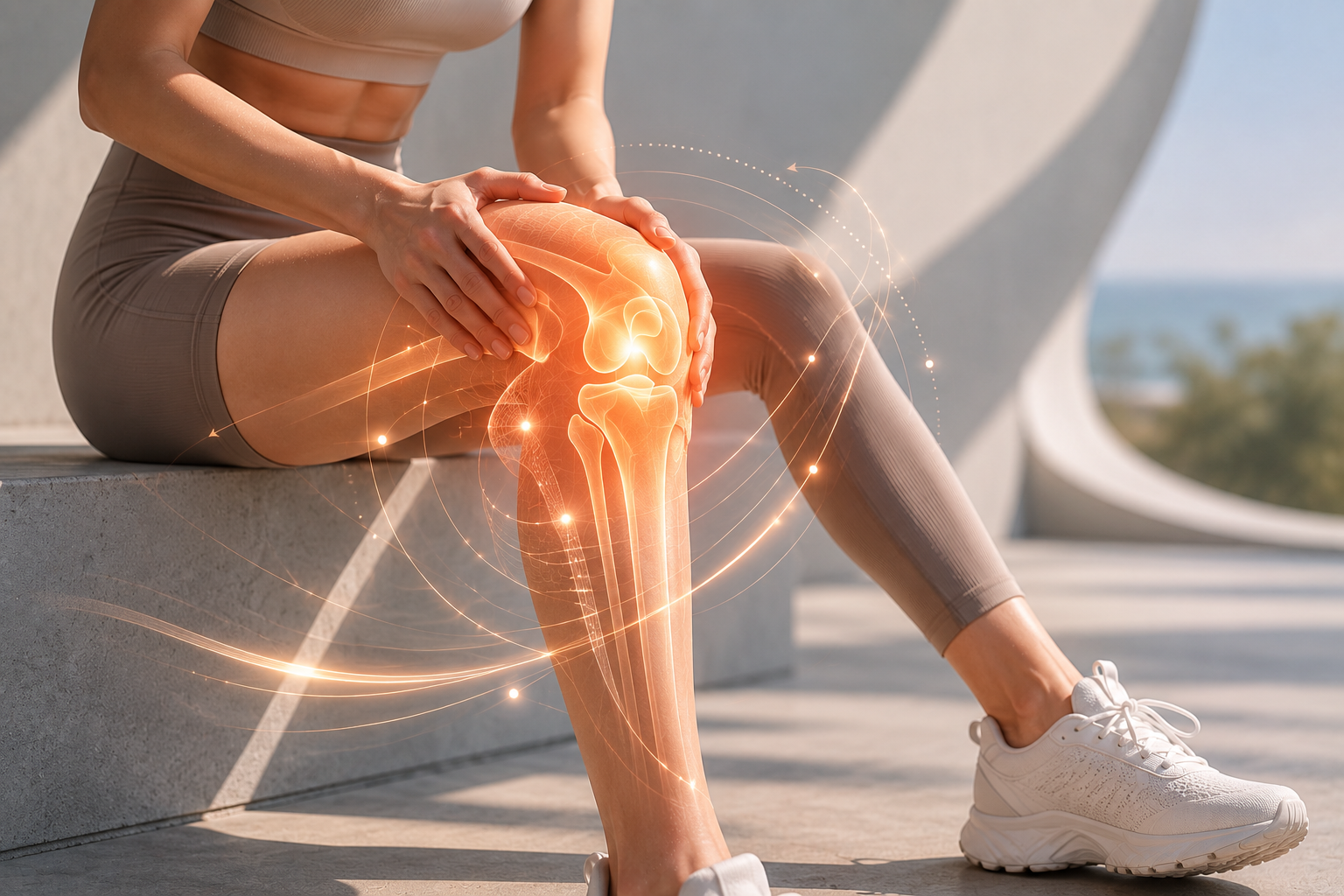
Knee Recovery
Why Do Your Knees Often Feel Fatigued Before Anything Else?
Knee discomfort is not only a problem for athletes.
Many people notice their knees feeling tired long before they experience discomfort anywhere else.
You may have experienced it yourself.
After a long day of standing.
After walking through airports while traveling.
After climbing stairs several times throughout the day.
Or after a workout that seemed completely manageable at the time.
The knees often become one of the first places where accumulated fatigue begins to appear.
Many people assume this is simply a normal part of getting older.
But in reality, everyday movement habits may place far more stress on the knees than most people realize.
These habits may include:
- Long hours of standing
- Excessive walking throughout the day
- Frequent stair climbing
- Sudden activity after prolonged sitting
- Limited lower-body mobility work
- Skipping warm-ups before exercise
- Wearing footwear with inadequate support
Over time, these patterns may gradually increase the load placed on the knees.
When recovery does not keep pace with daily demands, symptoms may begin to appear:
- Stiffness when standing up
- Soreness while climbing stairs
- Heavy legs after long walks
- Tightness during squats
- Discomfort after workouts
At first, many people dismiss these sensations as simple fatigue.
Until everyday movements begin to feel less natural than they once did.
Why Do the Knees Carry So Much Stress?
The knees sit at the center of nearly every lower-body movement.
They help connect:
- The hips
- The thighs
- The calves
- The feet
Every step requires the knees to absorb, transfer, and distribute force throughout the body.
Whether walking, running, climbing, lifting, or simply standing, the knees play a critical role in maintaining movement efficiency and stability.
The challenge is simple:
The knees work all day long — but most people rarely think about helping them recover.
This becomes especially important when:
- Lower-body muscles become tight
- Foot support decreases
- Movement mechanics become less efficient
- Daily fatigue continues to accumulate
When these factors build up, stress may gradually concentrate around the knee joint and surrounding tissues.
Over time, movement may begin to feel heavier, stiffer, and less comfortable than before.
Knee Fatigue Is Often a Recovery Problem
Not just a movement problem.
One of the biggest misconceptions about knee discomfort is that it is always caused by doing too much.
But in many cases, the issue is not simply how much movement occurs.
It is how well the body recovers from that movement.
Standing.
Walking.
Training.
Commuting.
Traveling.
These activities place continuous demands on the lower body every day.
When recovery falls behind, tension and fatigue may gradually accumulate.
The knees are often one of the first places where the body begins to notice the difference.
That is why recovery is not only about reducing activity.
It is about helping recovery happen continuously.
When Do Knees Tend to Accumulate the Most Stress?
Long Hours of Standing and Walking
For many people working in retail, healthcare, education, hospitality, and service industries, prolonged standing can gradually increase lower-body fatigue throughout the day.
Training and Exercise
Squats, running, jumping, and other lower-body exercises may create accumulated tension throughout the legs after activity.
Sudden Movement After Sitting Too Long
After extended periods of sitting, even simple movements like standing up or climbing stairs may feel noticeably stiffer.
Travel and Long-Distance Movement
Long walks, sightseeing, hiking, and extended travel days may gradually reduce lower-body comfort and movement efficiency.
That is why maintaining lower-body recovery and mobility every day becomes increasingly important for active individuals.
The VITAL SALVEO Philosophy
Recovery Should Keep Moving.
At VITAL SALVEO, we believe recovery should not only begin after activity ends.
It should continue throughout everyday movement.
Modern life rarely gives the body complete rest.
Many people spend their days moving from one activity to another:
- Standing
- Walking
- Commuting
- Traveling
- Training
The body is constantly adapting to movement demands.
Recovery support should adapt with it.
That is why we redefine recovery gear as:
Active Energy Management Gear
Designed to support recovery through daily movement, not just after exercise.
Supporting Recovery Through Everyday Wear
At the core of VITAL SALVEO is our:
3D Bio-Dynamic Infrared Recovery Technology
This technology combines:
- Graphene fibers
- Germanium technology
- Ergonomic dynamic structures
When the fabric reaches 32°C against the skin, it activates our Thermal Trigger System.
Using natural body heat, the fabric is designed to continuously generate infrared energy.
This process helps create a photobiomodulation-inspired environment that supports:
- Circulation
- Muscle relaxation
- Everyday comfort
- Recovery efficiency
No batteries.
No complicated setup.
Just recovery support integrated naturally into daily movement.
Why “Flow, Not Restriction” Matters
When discomfort appears, many people immediately turn to overly restrictive support gear.
While excessive compression may feel supportive temporarily, it can sometimes interfere with natural movement patterns.
This is especially important for the knees — a joint designed to move continuously throughout the day.
That is why VITAL SALVEO believes in:
Flow, Not Restriction.
Through our 3D Bio-Dynamic Structure, we help balance:
- Stability
- Freedom of movement
- Breathability
- Natural circulation flow
Because the best recovery should not stop movement.
It should help movement feel more comfortable.
Knee Health Is Everyday Health
Most people only begin paying attention to their knees once discomfort appears.
But healthy movement is closely connected to:
- Daily circulation
- Lower-body mobility
- Muscle recovery
- Movement efficiency
- Long-term fatigue management
True recovery is not something that begins only after discomfort develops.
It is something that should support the body every day.
Because long-term comfort is not created by avoiding movement.
It is created by helping the body recover from movement more effectively.
VITAL SALVEO
Wake Up Your Body’s Potential.


分享:
You Thought It Was “Just a Rolled Ankle”
Why Do Your First Steps Feel Different After Sitting?